At the recent Exit Five Marketing Leadership Retreat, I sat down with leaders for 1:1 sessions dedicated to their specific brand measurement strategies and challenges. The folks who signed up weren't looking for the basics—they wanted to talk about how to differentiate in a sea of similar competitors, why their brand is being considered (or not), and whether their positioning is actually landing.
That focus on rich insights makes sense: Marketing teams are under pressure to produce content faster, react to the market in real time, and keep pace with AI-driven brand discovery. We’ve even seen this play out in our 2026 Trends report, which showed a year-over-year surge in template use for Brand Attributes (167%), Brand Tracking (75%), and Campaign Awareness (33%).
Since focusing on the right signals is what matters most, I’ve put together five guidelines to help marketers build a solid brand measurement foundation.
1. Do the pre-work—your strategy depends on it
The first rule of brand measurement is that you shouldn't create your strategy in a vacuum. While quantitative tracking is excellent at telling you how much a metric has moved, it doesn't always tell you what you should be measuring in the first place. Before you start tracking, you have to talk to real people.
This pre-work can take many forms, from holding focus groups to analyzing open-ended responses in your annual brand studies. By listening to the specific language your customers use, you can identify blind spots where you currently lack data. Without these early conversations, you risk wasting time and resources on misaligned marketing that won’t build genuine relationships with potential customers.
The takeaway: Quantitative data is only as good as the qualitative foundation it’s built on. Don't skip the pre-work; it’s how you make sure you’re measuring what actually matters to your buyers.
2. Clarify your audience understanding
You can’t effectively track your brand until you deeply understand who your audience is—and who they could be. A common thread from my conversations at the retreat was that many teams are currently evolving their audiences, moving upmarket or expanding into new use cases, yet they’re still looking at blended data that muddies the results.
Through measurement and segmentation research, you should identify exactly who your priority customers are. Once these segments are defined, they must be the anchor for all future brand measurement. You need to know if your strategy is landing with the people who actually move the needle for your business. Otherwise, it’s easy to optimize for the wrong outcome.
The takeaway: If your audience is evolving, your measurement segments must evolve too. Stop relying on blended data that hides the real story.
3. Prioritize consistency and clarity
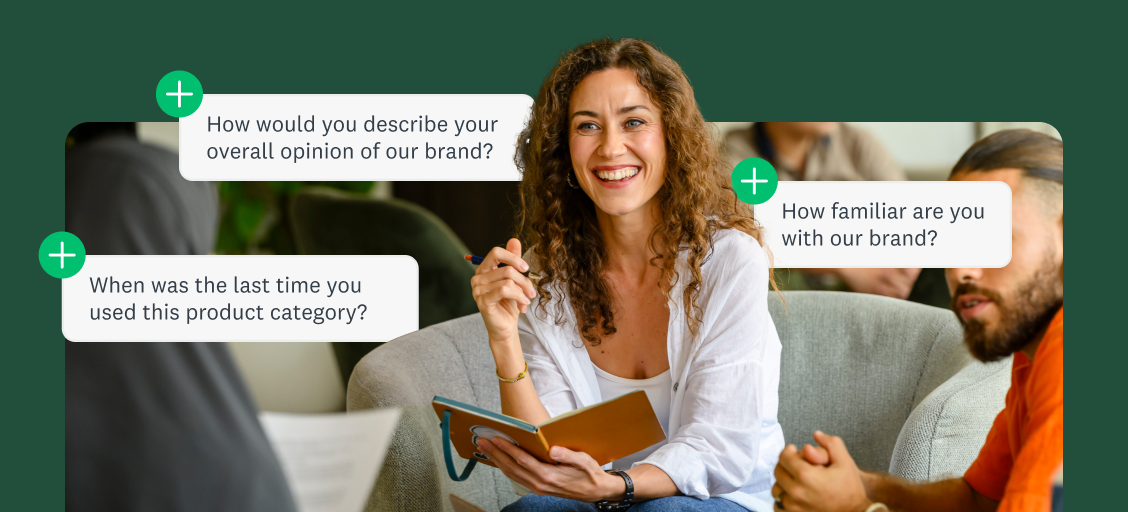
The hardest part of brand tracking isn't starting the program—it's resisting the urge to tinker with it. I’ve seen it happen many times: A leader changes their tracker mid-year and is disappointed later when the data can't show if their strategy worked because the trend is gone. Remember, a tracker’s true purpose is to provide an ongoing program that evaluates how your marketing activities impact brand image and perceptions over time.
Clarity is equally important. You don’t need to ask a hundred questions to get useful insights. Use your pre-work qualitative insights to identify the essential metrics that align with your strategy and stick to that baseline. When you stay concise and consistent, you protect the integrity of your data.
The takeaway: A brand tracker isn't the place for every curiosity. Keep it lean, keep it consistent, and let the trend line tell the story.
4. Align KPIs to your specific business strategy
Your metrics should act as a guide for your strategy, which means you need to choose KPIs that reflect where you’re aiming in the funnel. A common pitfall I’ve seen is marketers relying on standard brand scores that don’t actually line up with their team's specific goals. For example, if your marketing activities are designed to drive top-of-funnel brand awareness, using a metric like NPS® is often a mismatch because it sits much further down the funnel. It also tends to only capture the sentiment of your current users—but what about the rest of the market?
In several conversations at ExitFive, leaders mentioned that they had high visibility but still weren't being selected. That's a positioning and consideration issue, not an awareness issue. Selecting the right leading indicators ensures your data actually predicts future success and proves the real impact of your work.
The takeaway: Don’t get distracted by one-size-fits-all metrics. Align your KPI with your marketing goals so you’re evaluating your brand based on what you’re actually trying to achieve.
5. Respect the slow burn of brand evolution
Brand tracking is a high-altitude tool that’s designed to capture the landscape, not clarify every minor bump in the road. It’s vital that you don’t mistake a wiggle in the data for a collapse of the brand. Brands move slowly, and small changes in the trend are often just statistical noise.
This is a point I emphasized in many of my 1:1 sessions. Marketing is moving faster than ever—with more channels and more content—but brand perception simply doesn't move at that same speed. The best teams balance moving quickly in execution with staying steady in how they measure impact. Look at the full trend line to understand the big picture; usually, the sky isn't falling—it’s just data being data.
The takeaway: Remind your stakeholders that brand is a “slow burn” variable. Trust the long-term trend over the short-term fluctuation.
A final word of advice
If there’s one thing I took away from these Exit Five conversations, it’s this: Brand measurement isn’t about more data, it’s about creating a measurement system that gives you a clear signal you can trust. When you have that, everything else gets easier—decisions, alignment, and where to invest next. And in a world that’s only getting faster, that clarity matters more than ever.
Get started with brand tracking survey templates
Build a consistent measurement program with ready-to-use templates designed for deeper brand insights.