Keeping Employees Happy: 12 Proven Ways to Boost Workplace Happiness
Boost workplace happiness with these tips and enjoy the rewards of a cheerful team.

Happy employees truly keep everything moving. In fact, ignoring employee happiness can seriously impact your business success. According to Gallup’s 2025 State of the Global Workplace Report, low employee engagement costs the global economy a staggering US$10 trillion. Happiness at work is closely linked to employee engagement and has a major impact on your bottom line.
Employee happiness is essential for a productive workforce, stronger retention and overall business success. And the benefits go even further. By boosting happiness at work, organisations can lower turnover, encourage innovation, enhance their reputation as an employer and much more. In this guide, we’ll look at why employee happiness matters and share 12 proven strategies to help you increase it.
What is employee happiness?
Put simply, employee happiness is all about an employee’s positive perspective on their work experience. A healthy, satisfied team member feels fulfilled and engaged in their role. Factors like a supportive workplace culture, work-life balance and plenty of growth opportunities all help to boost happiness. It also includes an employee’s emotional and mental well-being at work.
Other elements that contribute to employee happiness include:
- Recognition and appreciation for achievements
- Positive relationships with colleagues
- Feeling valued by their employer
- Company alignment with personal values
- Inclusive workplace culture
Benefits of happy employees
Keeping employees happy is essential for any organisation’s success. Achieving great results at work depends on your team’s enthusiasm for delivering high-quality work each day. People who enjoy their job and the company they keep are far more likely to make valuable contributions to their organisation.
Increased productivity and creativity
Employers who keep their staff happy enjoy greater productivity and creativity. When people feel their work has meaning, they’re far more likely to stay motivated. Our employee morale research shows that 94% of employees who see their work as meaningful haven’t experienced burnout in the past six months. Burnout stifles creativity and reduces productivity, so by focusing on employee happiness, you’re encouraging your team to consistently do their best work.
Improved employee engagement
Happiness at work has a direct impact on employee engagement. Achieving workplace happiness depends on factors like work-life balance, meaningful roles and a positive culture. When these elements are in place, they boost engagement, which directly supports stronger business results. Employee engagement is vital for high performance and productivity. The more connected employees feel to your company, the more engaged and committed they become.
Better retention rates and reduced turnover
Happiness is a key driver for improving retention and lowering turnover. When team members feel content and satisfied, they’re much less likely to leave. According to a report by SHRM, 61% of people cited a lack of career development as one of the top three reasons for turnover. Employees are far more likely to be happy when they feel genuinely supported by their employer and have a clear growth plan.
Positive impact on team collaboration and workplace culture
Put simply, happy employees are great collaborators. When people are content with their workplace and colleagues, collaboration naturally improves. Employee relations play a vital role in teamwork, company culture and overall happiness. Team members who share similar values and ways of thinking can join forces to create innovative solutions. What’s more, satisfied employees are more likely to contribute positively to the workplace culture, giving morale an extra lift.
Enhanced customer satisfaction
Customers are directly affected by how happy your employees are. When people feel proud to come to work each day, they do a better job and deliver stronger results for your customers. Clients who interact with happy employees are more likely to have positive experiences and receive excellent service. If your company puts employee happiness first, customers benefit from more innovation, higher productivity and friendlier service. Plus, happy customers can even boost morale and happiness at work, creating a cycle of positive outcomes all round.
Better health and fewer sick days
Recent studies show that unhappy employees take three times as many sick days as those who consider themselves happy at work. This highlights how happier employees enjoy better health and are more engaged. Achieving work-life balance is crucial to happiness and overall wellbeing at work. When employees lack this balance, they’re less able to look after themselves and are more prone to illness or burnout. Fewer sick days and improved mental health contribute to a stronger business performance.
Boost employer reputation
Happy employees are likely to share positive reviews about their company, which can enhance your reputation as an employer. Staff who spread good word of mouth or post glowing online feedback can significantly raise an organisation’s profile. A strong employer reputation attracts top talent and helps you maintain a thriving workplace culture. By putting employee happiness first, companies can encourage more positive reviews and strengthen their reputation.
Higher profitability
Research from Willis Towers Watson reveals that companies with highly engaged employees saw their operating margins grow by nearly 4% on average. This improvement may be thanks to fewer sick days, greater productivity and creativity, stronger retention or better collaboration. Whatever the reasons, higher profitability is a powerful incentive for investing in employee happiness. By nurturing engagement and satisfaction, businesses can achieve even better outcomes.

12 tips on how to increase employee happiness
Research shows that employee happiness at work dropped ten times faster between 2020 and 2023 than it did from 2016 to 2019. To prevent further decline, organisations should adopt these 12 practical steps for building a happier workplace and improving employee happiness.
1. Encourage open communication
Open and honest communication is key to making sure every team member’s voice is heard. Transparent dialogue helps solve problems more effectively, leading to better business outcomes. Build a company culture where employees feel listened to and are comfortable sharing their opinions. Team members should be able to raise concerns with management in a respectful way, without fear.
Key considerations include:
- An open-door policy
- Feedback loops
- Accessible information about company updates
2. Recognise and reward achievements
Who doesn’t enjoy being recognised and rewarded for a job well done? Team members value it when managers or HR go out of their way to highlight their achievements. Recognition like this helps lift morale and reassures staff that their contributions matter at every level. When employees feel valued at work, they’re much more likely to stay engaged and committed to the organisation’s goals.
Key considerations include:
- Employee spotlights
- Peer recognition platforms
- Performance-based bonuses
3. Provide professional development opportunities
Professional development opportunities allow team members to upskill and grow within their careers. By offering avenues for professional growth, companies can show they’re invested in their employees’ futures, boosting happiness and motivation. This could include running workshops or providing educational benefits to encourage skill-building and development.
Key considerations include:
- Tuition reimbursement
- Lunch n’ Learns
- Educational workshops
4. Promote work-life balance
Work-life balance is vital for employee happiness. Team members want to be able to switch off from work once they leave the office or log off for the day. Remote working options can make a real difference, reducing commuting time and offering greater flexibility. Achieving this balance enables employees to look after themselves and their families, helps prevent burnout and promotes a healthier workforce overall.
Key considerations include:
- Flexible working hours
- Hybrid or work-from-home options
- Mental health days
5. Create a positive work environment
Organisations can build a positive work environment by looking at things from their employees’ perspective. Use feedback surveys to discover what your team values most. Then, act on the key findings to create a more inclusive workplace. Team members want to feel safe, appreciated and comfortable, whether they’re in the office or working remotely. A strong, supportive culture helps everyone to thrive.
Key considerations include:
- DEI initiatives
- Zero-tolerance policies
- Opportunities to get to know each other
6. Offer competitive compensation and benefits
A study from Lattice found that the biggest cause of employee turnover was a lack of competitive pay and benefits. To keep staff happy, offer competitive salaries and a comprehensive employee benefits programme. Surveying your workforce helps you design benefits packages that people genuinely value.
Key considerations include:
- Industry benchmarking compensation
- A mix of mandatory and voluntary benefits
- Understanding which benefits are most valued
7. Foster meaningful relationships at work
Colleagues play a vital part in employee happiness. Supportive coworkers can boost satisfaction and strengthen commitment to the organisation. By encouraging meaningful relationships at work, organisations can lift morale and increase dedication. Connections between staff and their managers are also a major source of happiness. Leaders should invite employees to get involved in collaborative projects and team-building activities to help nurture these important relationships.
Key considerations include:
- Team-building events
- Watercooler chat channels
- Manager check-ins/one-on-one meetings
8. Provide opportunities for growth and autonomy
Growth opportunities matter to employees. Employers can support this by encouraging knowledge sharing between colleagues and helping team members develop new skills. Set out clear career paths to give employees a sense of direction and motivation for advancement within your organisation. Training and development also boost autonomy, empowering staff to take ownership of their work. This kind of autonomy leads to greater creativity, responsibility and professional growth.
Key considerations include:
- Mentoring programmes
- Job shadowing
- Performance reviews
9. Promote diversity, equity and inclusion
Diversity, equity and inclusion (DEI) initiatives make sure every team member has the tools and support they need to succeed. Workplace diversity drives more innovation, increases engagement, leads to better decision-making and helps boost happiness at work. It’s also crucial for creating a healthy workplace culture that supports employee wellbeing.
Key considerations include:
- Zero-tolerance discrimination policies
- Inclusive hiring practices
- Diversity and inclusion training
10. Listen to employee feedback
Collecting employee feedback is only the first step; acting on it is just as important. Organisations should listen carefully to what their employees say and make changes to support happiness at work. Regularly send out surveys to gather and review feedback. When you implement changes based on feedback, let your employees know how their input made a difference and explain the decisions you’ve taken.
Key considerations include:
- Employee feedback surveys
- Suggestion boxes
- Close the feedback loop
11. Organise social events
Social events give employees a chance to connect outside of regular working hours. Organise activities such as happy hours, quiz nights or other gatherings to help team members get to know one another. When employees feel connected to their colleagues, they’re more likely to collaborate well and enjoy the workplace. Well-planned events foster peer relationships and enhance employee happiness by encouraging friendly interaction.
Key considerations include:
- Awards/recognition events
- Trivia or charity events
- Happy hours
12. Show gratitude regularly
Organisations that regularly show gratitude to employees help them feel truly valued. When workers feel recognised for their effort and dedication, their job satisfaction naturally increases. Employers should express appreciation often to support overall happiness among their teams.
Key considerations include:
- Write personalised notes
- Use an employee recognition platform
- Thank your team
How to measure employee happiness
Measuring employee happiness is essential for making lasting improvements. Employers should regularly track happiness to better understand engagement and satisfaction. Building a happy workforce takes ongoing assessment and the flexibility to update workplace practices when needed. There are several ways to measure workplace happiness, including employee satisfaction surveys, pulse surveys, eNPS and regular check-ins.
Employee satisfaction surveys
Measure employee satisfaction by using surveys that ask the right questions. Employee satisfaction surveys help you assess burnout, measure engagement and spot areas where your business can improve. By tracking satisfaction, you can take smart actions to boost retention and reduce turnover.
Use ouremployee satisfaction survey template to collect feedback from your employees today.
Pulse surveys
Organisations should use pulse surveys to keep track of employee happiness at any point in time. Pulse surveys are a fast, effective way to gather regular feedback on how people are feeling. These concise, internal surveys are sent out far more frequently than large-scale surveys. Use pulse surveys to monitor shifts in employee happiness levels over time.
Conduct pulse surveys using our expert-written pulse survey template.
Employee Net Promoter Score (eNPS)
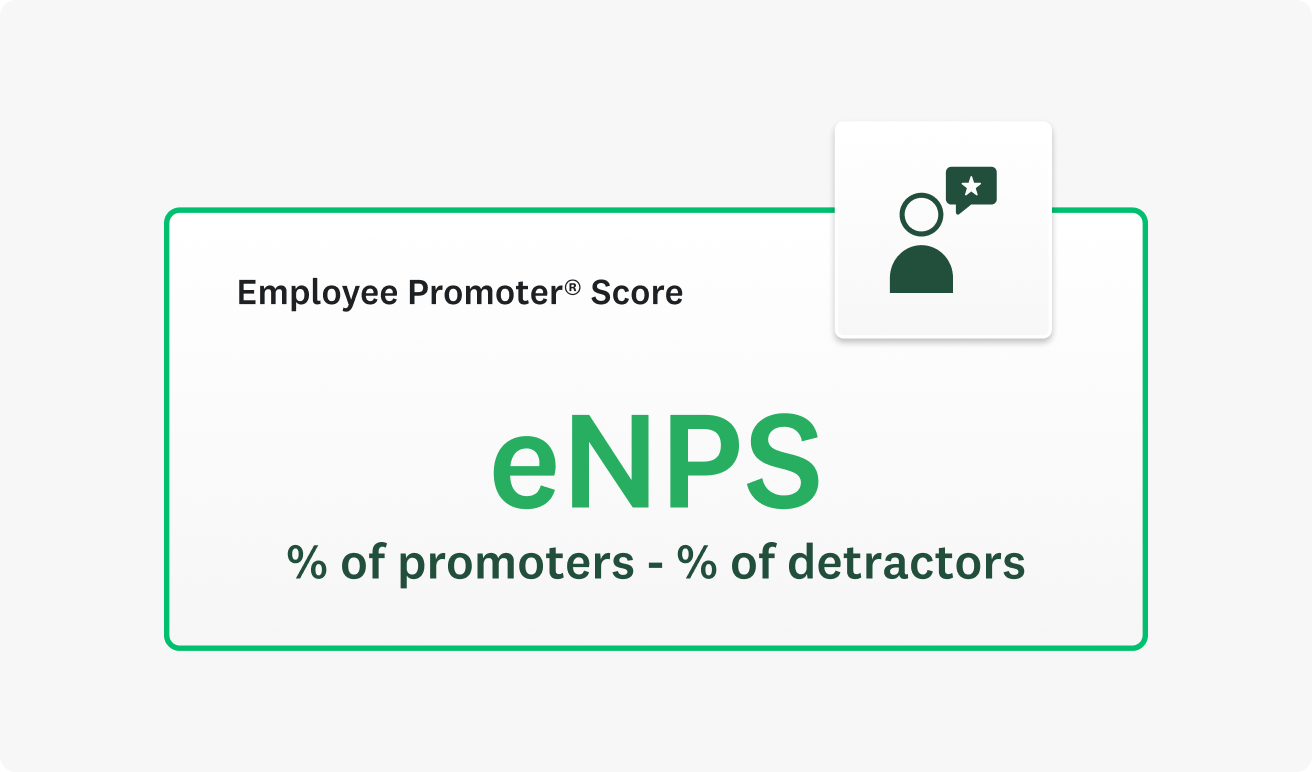
Employee Net Promoter Score® (eNPS) surveys adapt the classic NPS approach for employees. Staff are asked, “On a scale of zero to ten, how likely are you to recommend [Company Name] as a place to work?” By measuring eNPS, companies can gauge employee loyalty and satisfaction.
Use ourNet Promoter Score survey template to collect feedback on your organisation.
Regular one-on-one check-ins
Managers should have regular one-on-one check-ins with their team members to track satisfaction and happiness. These sessions are an excellent chance for employees to share any workplace concerns or ask questions about their roles.
Sendemployee satisfaction surveys after one-on-one check-ins to collect more relevant data.
How can leadership foster employee happiness?
Leadership teams shape the workplace environment with their behaviour and outlook, playing a crucial role in overall happiness. Managers and leaders need to recognise how much impact their actions have on employee wellbeing.
Leading by example
A leader’s positive attitude and enthusiasm rub off on team members. Leading by example is a huge way leadership teams can improve employee happiness. Positive leadership styles, such as inspirational, transformational, authentic and servant leadership, have been shown to improve workplace happiness. To keep spirits high, avoid inducing too much pressure on your team and maintain a supportive environment.
Providing support and resources
The right support and resources empower employees to flourish at work. Without supportive leadership, team members may feel blocked or disheartened in their roles. Leaders uplift employee happiness by keeping their doors open, prioritising wellbeing and providing access to learning opportunities. Many organisations develop in-house resource libraries filled with training materials for staff to use whenever they need.
Fostering a culture of recognition and respect
A company culture grounded in recognition and respect puts employees first. Leadership teams can nurture this by celebrating individual and team achievements through employee recognition platforms, awards or simple thank-you notes. Fostering respect also means speaking courteously to others and actively listening to different perspectives.
Showing empathy through good communication
Good leaders combine empathy with strong communication skills. Set your team up for success by clearly explaining tasks and responding to employees’ questions. Put yourself in their shoes during tricky situations, aiming to understand their perspectives and actively listening to what they have to say.
Frequently asked questions about employee happiness
- What is a happy employee?
- What truly makes employees happy?
- Are happy employees more engaged?
- Do happy employees work harder?
Increase employee happiness with SurveyMonkey
Our recent workplace trends study shows that nearly half of in-office employees have experienced rising workplace stress over the last five years. Employee happiness is crucial, from boosting profitability to improving staff retention. The 12 tips we’ve outlined can help organisations foster happier workplaces and achieve better business results.
One of the most important steps in boosting employee engagement and happiness is acting on feedback. HR professionals can use an employee feedback platform like SurveyMonkey to gain valuable insights and enhance workplace happiness.
These survey templates are essential for boosting employee happiness.
Sign up for SurveyMonkey today to get started.
NPS, Net Promoter & Net Promoter Score are registered trademarks of Satmetrix Systems, Inc., Bain & Company and Fred Reichheld.
Ready to get started?
Discover more resources

Attract, engage and retain top talent with data-driven insights
Create HR surveys with SurveyMonkey to gather feedback, boost engagement and improve workplace culture. Streamline HR processes with customisable templates.

How to Build a Winning Employee Engagement Programme
Build an engagement strategy to improve retention and prove business impact. Empower managers to turn employee feedback into workplace improvements.

What is Employee Net Promoter Score?
Discover how HR professionals use the employee Net Promoter Score (eNPS) to uncover employee sentiment for reducing turnover and creating an engaging workplace environment.

HR Survey Questions: 80 Examples and Best Practices
Discover 80 HR survey questions, best practices and success tips to boost employee engagement.