A picture is worth a thousand words, and surveys with pictures often produce higher engagement and better response rates. That can make a big difference for your online surveys, especially if you need to collect visual-based feedback from customers, employees or your market.
In this article, we’ll explore how surveys with pictures work and share best practices for building, launching and analysing them. Read on for an in-depth look at when and how to include pictures in your surveys.
What is a survey with pictures?
A survey with pictures (also referred to as a picture survey or a photo survey) is a survey that includes questions with accompanying photos.
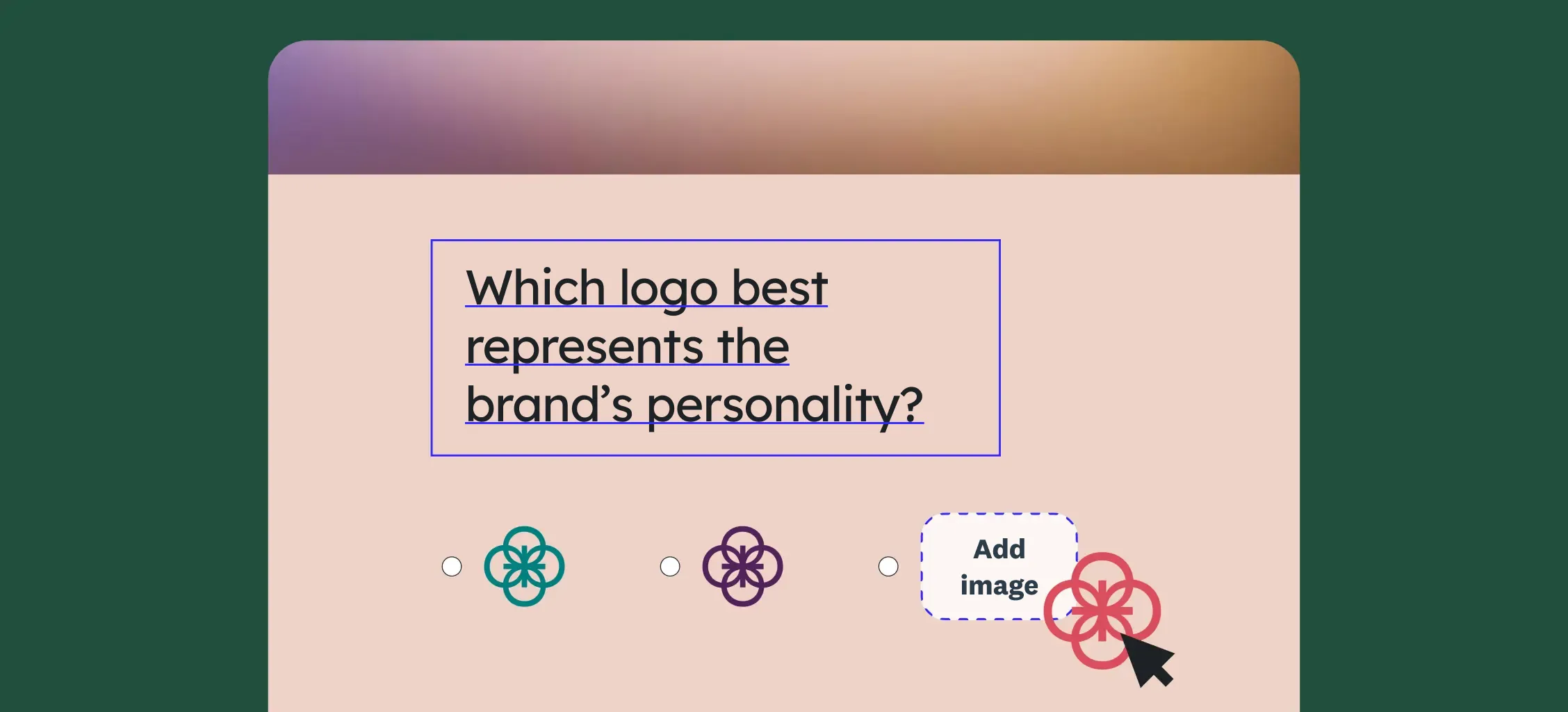
Images aren’t just an engaging way to gather opinions from your respondents; they’re also critical tools for market research surveys (think ad, logo or product packaging testing). Using images as answer options allows researchers to gather more precise feedback on specific visual elements.
With SurveyMonkey, you can easily add images using simple drag-and-drop functionality. SurveyMonkey hosts, sizes and optimises images for you so your survey looks just right.
How to create surveys with pictures
Wondering how to incorporate pictures into your online surveys? If so, we’re going to highlight the key steps involved in creating image surveys.
Related: Customising your survey
Step 1: Choose a platform
First, you need to select a survey creation platform. SurveyMonkey offers unique survey creation tools that make crafting customised surveys a breeze. With SurveyMonkey, you can drag and drop pictures into your survey to boost engagement and response rates and ask specific, visual-based questions.
To get started, explore SurveyMonkey survey creation tools.
Step 2: Create a survey
Your survey may be formatted differently depending on the type of data that you’re looking to collect. Picture surveys are often used for product development, concept testing and package testing purposes. Select a template or start from scratch to create your custom survey design.
Not sure where to begin? Find ready-to-use templates for product development surveys or concept testing to get started quickly.
Step 3: Add questions
SurveyMonkey templates feature expert-written questions, but you can always customise and add questions to your survey. Consider the objectives of your survey when writing questions. Each question should be relevant to achieving your goals.
Step 4: Upload images
Next, upload your images. Make sure that you use optimised settings to avoid lag in load times. Use clear, high-quality images for the best results.
Additionally, consider your audience members and their needs. Some respondents may rely on screen readers or other accessibility tools to view digital content. Make sure that you use rich alt text as well as accurate image file naming conventions so that respondents can give feedback that most closely aligns with their perspective.
Step 5: Integrate images
Integrate your images into your survey as visual aids. Use images where it makes sense in questions or as answer options.
Step 6: Customise and test
With SurveyMonkey, you can customise and even brand your survey with your logo and colours. Once you’ve created the survey and reviewed it, share it with stakeholders to ensure that everyone is on board and there aren’t any confusing questions or errors.
For extra peace of mind, you can always rely on our built-in AI to detect issues and optimise your respondent experience.
Step 7: Share, and collect responses
Now it’s time to send your survey to your target audience and collect responses. Whether you’re sending a logo testing survey or gathering website feedback, make sure that you use a randomised sample for the most accurate results.
Best practices for creating image surveys
For best results, there are a few best practices to bear in mind when creating surveys with pictures.
Use high-quality, relevant images
In SurveyMonkey, it’s easy to add images as you build your survey by simply pulling images from your desktop into your survey. However, remember that it’s crucial to always use high-quality images that are relevant to the survey. Poor image quality can deter respondents from answering questions or completing the survey, leaving you with unclear data.
Use the right question type
SurveyMonkey has 25+ question types to help you ask the right questions in the right way.
With an image choice question, you can easily obtain closed-ended feedback by asking people to select one or more image answers from a defined list of image choices.
A click map question allows you to obtain feedback directly on an image, and it’s a great way to find out which part of an ad or product package is most appealing to respondents.
Keep image file sizes optimised
Image file size is incredibly important for surveys with pictures. Optimised images are often compressed to take up less space and displayed in uniformly sized frames. Thankfully, SurveyMonkey takes care of the hard parts for you.
Forget about manually resizing images. For an image choice question, add images of any size; just try to avoid really small or really large ones. SurveyMonkey will resize them into uniformly sized frames.
It will look good on mobile, every time. When you insert images using our image choice or click map question types, they will be optimised for both mobile and desktop.
We’ll host image files for you. Don’t worry about using an image hosting service for your survey’s image answer options. You can upload your images directly into your SurveyMonkey surveys.
Add clear, concise captions
Want to add a little extra context to your image answer options? That’s a great idea; just add captions. They will appear to respondents below each image option.
Captions aren’t only helpful for respondents, either. When you add captions to your image answer options, they will carry over to the ‘Analyze results’ portion of your survey. That makes it easier to tell which data corresponds to which answer option.
Here’s an example:

But it’s no big deal if you don’t use captions: your data will still be organised in a way that’s easy for you to understand.
Avoid visual clutter
Too many images can cause visual clutter and a frustrating user experience. Limit your images to relevant questions or answer options only in order to avoid overwhelming respondents. Ideally, you shouldn’t include more than four photos per question.
Test across devices
It’s important to test your survey across different device types, such as desktop and mobile, to ensure image compatibility. Check to make sure that images are displaying properly on all devices so that all respondents will have with the same experience.
Images that are improperly sized may not be viewable on mobile devices. Make sure that you run some tests and listen to AI guidance before sending the survey out to your survey sample in order to avoid any issues.
Use consistent styling
When images aren’t sized the same or are formatted differently, a survey doesn’t look as professional or polished. Inconsistent photo styling may also lead respondents to make assumptions about the ‘best’ option, thus biasing your survey data.
Ensure you check that all images are formatted consistently in order to create a cohesive and unbiased survey experience.
Use click maps strategically
We mentioned click map questions above; they’re a favourite of market researchers because they allow them to collect specific insights about an image. Consider how you can prudently include this question type within your survey.
For example, you could ask survey-takers to click on the part of your packaging that they find most appealing or the part of your site that is most user-friendly.
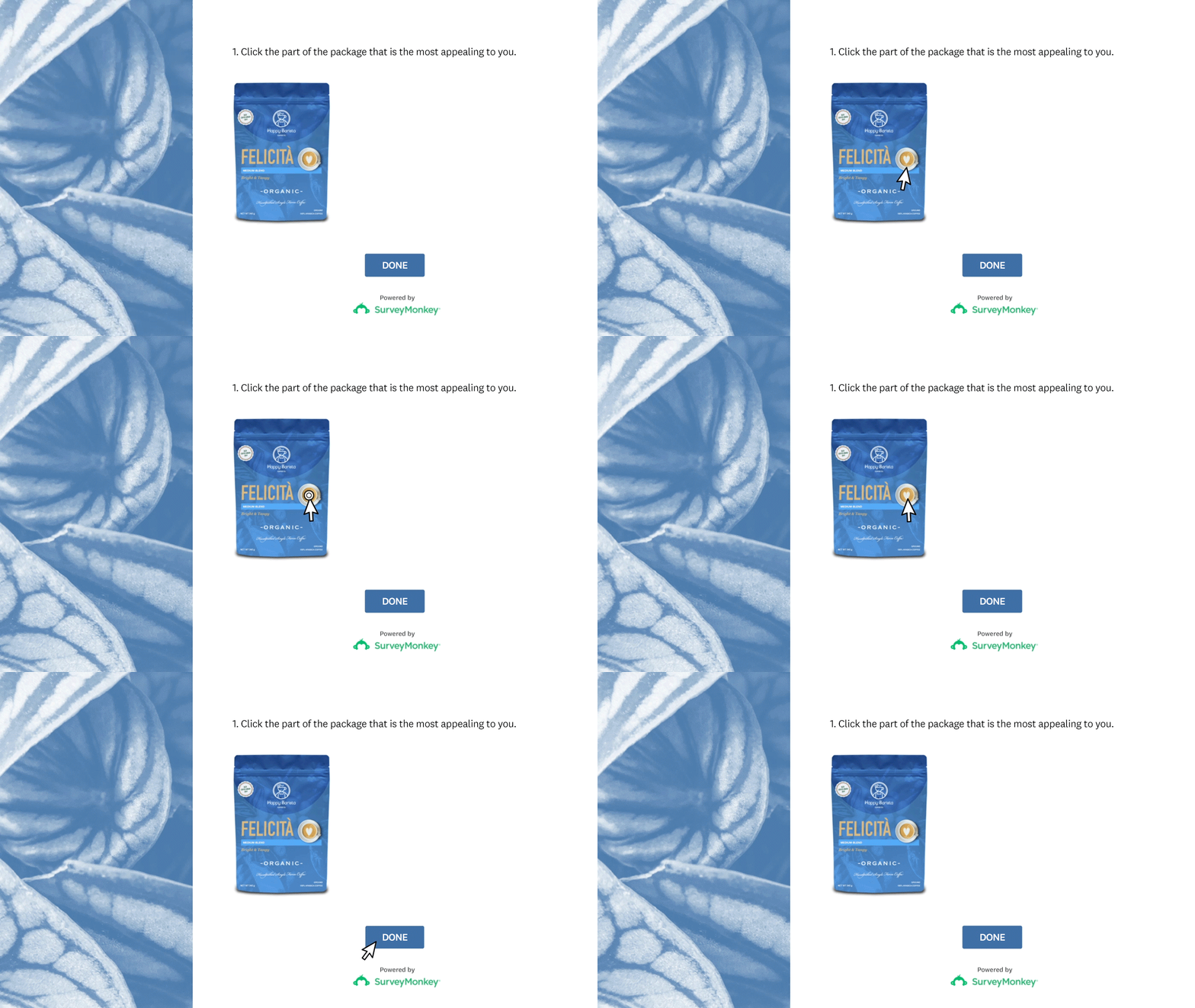
During analysis, you’ll see the image and where people clicked.
Here’s an example:

How can I benefit from photo surveys?
Photo surveys are ideal for all kinds of insights, including ad testing, package testing, logo testing, brand tracking, product development, idea screening and website feedback.
Let’s explore these specific applications to give you a clear understanding of how to use surveys with pictures.
Ad testing
Surveys with pictures are an excellent choice for ad testing. Let your target audience tell you which of your ad concepts are relevant, believable or make them want to buy. Here’s an example that you can follow.

Use concept testing templates to get feedback about your ad ideas easily.
Package testing
Photo surveys can also be useful for package testing. Which of your packaging concepts resonates with consumers? Which set of claims motivates them to buy? Which colours will stand out on the shelves?
Try package testing survey templates to test your packaging designs effectively.
Logo testing
A logo blunder is a big waste of time, money and resources, and can also be a major embarrassment for startups and corporations alike. Test yours first before it goes to market to ensure that it resonates with consumers.
For logo testing, use idea screening templates to gauge customer reactions.
Brand tracking
Many brand trackers contain a question that measures which brand attributes consumers associate with your brand. Is your brand modern, innovative, helpful or fun? Using images instead of words can provide you with even more clarity about brand perception, especially when paired with an open-ended “Why did you select this image?” question.
Use customer satisfaction survey templates to keep a pulse on your brand’s reputation.
Product development
Teams can test product ideas and new features during the product development process to understand how they will be received by consumers. This will help to ensure that your products launch successfully.
Use product development survey templates to refine your product ideas and gain a better understanding of customer needs.
Idea testing
Conduct market research using photo surveys to build up an in-depth understanding of your target audience. Test new ideas to see whether they spark enough interest for you to pursue them. This will ensure that you don’t waste time and resources on ideas that aren’t worth pursuing.
Explore idea screening templates to validate your ideas prior to full-scale development.
Website feedback
You can use click map questions to obtain immediate feedback about what your customers like about your site or where they could benefit from a little more guidance. For example, you could ask them where they would click to log in or which promotional banner they are most interested in.

Turn survey questions into visual experiences
Surveys don’t always have to be text based. Turn them into visual experiences by incorporating images into your surveys. Use photo surveys for everything from ad testing to website feedback in order to enhance the user experience and boost response rates.
SurveyMonkey is your partner for creating high-quality surveys. Our online survey software makes gathering feedback and doing research extremely simple. Sign up today to get started.